
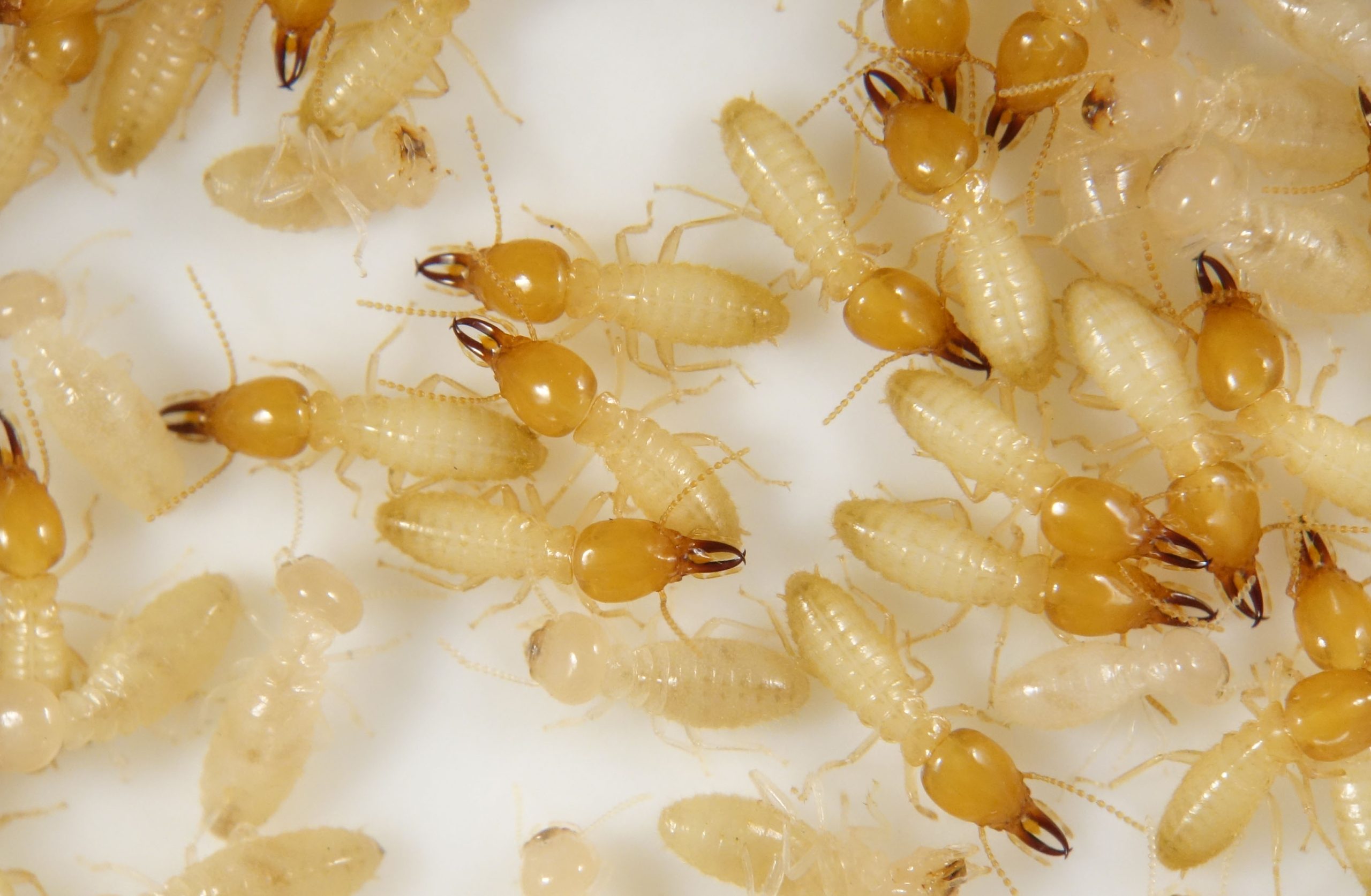

Considered one of the most aggressive and economically devastating termite species in the country, Formosan subterranean termites were introduced to the United States in 1956. These termites are native to the Far East.
Like other subterranean termites, Formosan termites feed on materials that contain cellulose, but because of their larger colony size, they attack a greater variety of wood at a faster rate than do native subterranean termites. They have an enormous reproductive capacity and a typical colony may exceed 1 million insects.
Although considered “subterranean” (underground, hidden) in habit, the members of the genus Coptotermes regularly construct aerial (above ground) nests within the structures that they infest. The possibility of both a subterranean nest close to the infested structure and an aerial within the structure can greatly increase the damage potential of these termites.